





Reliable Robotics has completed a Federal Aviation Administration (FAA) contract focused on advancing the integration of large uncrewed aircraft systems (UAS) into complex airport environments, marking a significant step toward broader adoption of autonomous aviation technologies. The work, carried out under the FAA’s Broad Agency Announcement (BAA) program, centred on collecting Detect and Avoid (DAA) data through a series of flights conducted in and around airport settings.
The effort contributes to ongoing regulatory and technical developments aimed at ensuring that uncrewed aircraft can safely and efficiently operate across all airspace classes, including terminal areas and active traffic patterns. Data gathered during the campaign is expected to support the FAA as it refines certification standards for DAA systems while also informing industry groups responsible for shaping technical benchmarks. The testing initiative involved collaboration with Virginia Tech’s Mid Atlantic Aviation Partnership (MAAP), alongside support from integration partners Sagetech, Collins, and uAvionix.
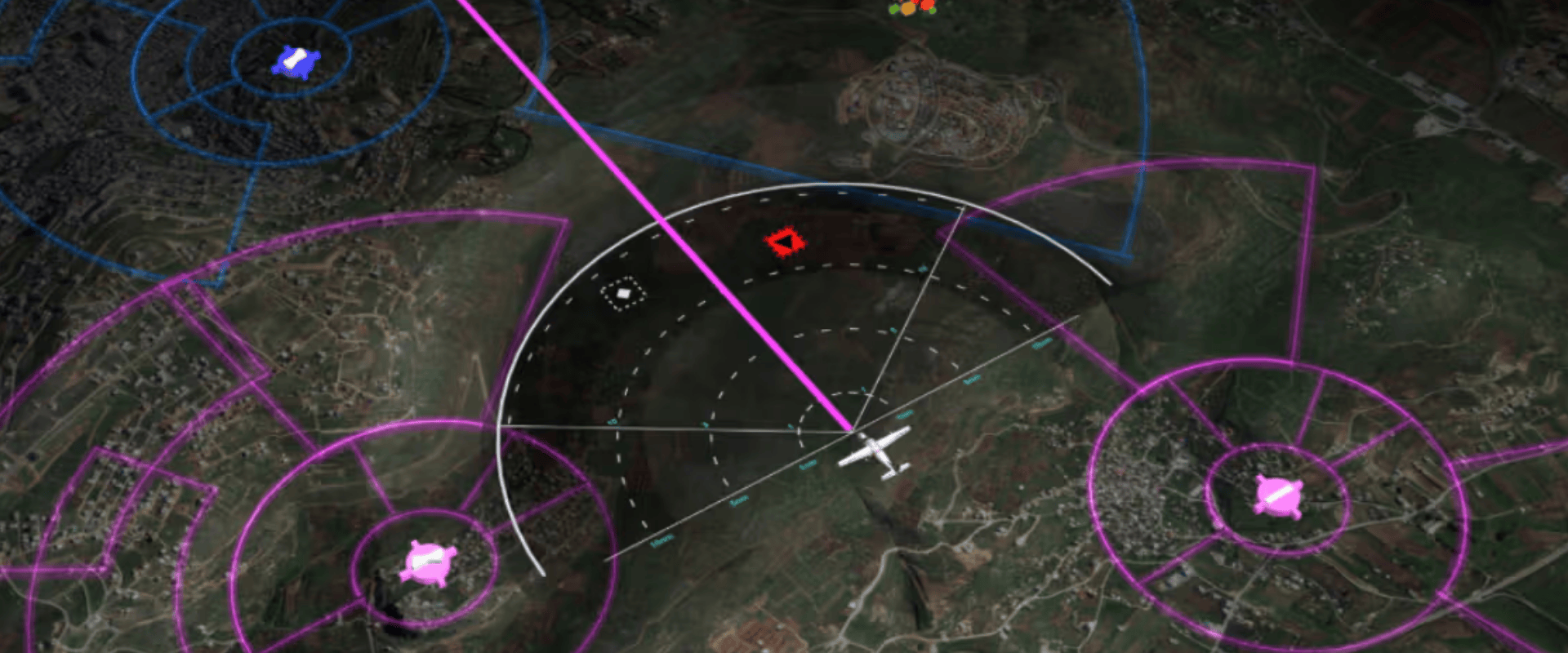
At the core of the testing was Reliable Robotics’ DAA system, which is designed to assist remote pilots in maintaining safe separation from other aircraft and executing collision avoidance manoeuvres. The system leverages Airborne Collision Avoidance System X (ACAS X), an FAA-developed algorithm that builds upon the widely used Traffic Alert and Collision Avoidance System II (TCAS II). Variants of ACAS X, including ACAS Xu tailored for autonomous fixed-wing aircraft, played a central role in the evaluation.
Flight tests commissioned by the FAA examined how the system performs across the transition between en route and terminal airspace, particularly in busy airport environments. The trials assessed how effectively the DAA system and ACAS X could generate alerts and provide manoeuvring guidance to remote pilots operating under these varying conditions. Data collected during these flights has been shared with the FAA to support the development of UAS-specific DAA standards.
“Demonstrating the ability of UAS to integrate into airport environments with a VFR traffic pattern is necessary for building a scalable aviation autonomy solution. The data Reliable captured through this testing under the FAA is nearly impossible to generate in a lab environment and is tremendously useful in the development of relevant and useful standards.
Through this testing, we’ve been able to confirm several key aspects of the technical standards that the FAA is leveraging for UAS.”
– Brandon Suarez, Vice President, UAS Integration, Reliable Robotics.
Among the findings highlighted by the campaign was the importance of distinguishing between en route and terminal environments in DAA system behaviour. Results showed that the ACAS X algorithm adapts its outputs depending on the airspace context, mirroring adjustments made by pilots operating under Instrument Flight Rules (IFR) when interacting with Visual Flight Rules (VFR) traffic. Ensuring continued collision avoidance capability at lower altitudes, particularly during takeoff and landing, was identified as critical for maintaining safety in airport vicinities.
To fulfil the contract requirements, the company combined extensive Hardware In The Loop testing with live flight trials. These included pre-planned encounter scenarios conducted near the terminal area of Hollister Municipal Airport in California. The structured testing environment enabled the collection of detailed operational data across a variety of realistic scenarios.
“Real-world testing advances the substantiation of standards that we rely on to build DAA solutions that keep our skies safe. With the growth of uncrewed aircraft systems in the market, we value the opportunity to contribute to the development of DAA standards.”
– Matthew Hamilton, Chief Technology Officer, Sagetech.
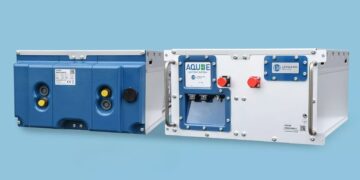
The broader testing effort brought together multiple technology providers, with Sagetech supplying prototype ACAS X hardware, Collins contributing ground-based radar systems, and uAvionix providing Skylink C-Band communication equipment. Insights from the campaign have been shared with RTCA Special Committee 228 (SC-228) and Special Committee 147 (SC-147), supporting ongoing work to validate and refine the next generation of standards for advanced DAA systems.
If you would like to engage with companies driving innovation in autonomous aircraft systems and airspace safety, contact us today about our MTB Aviation events.