





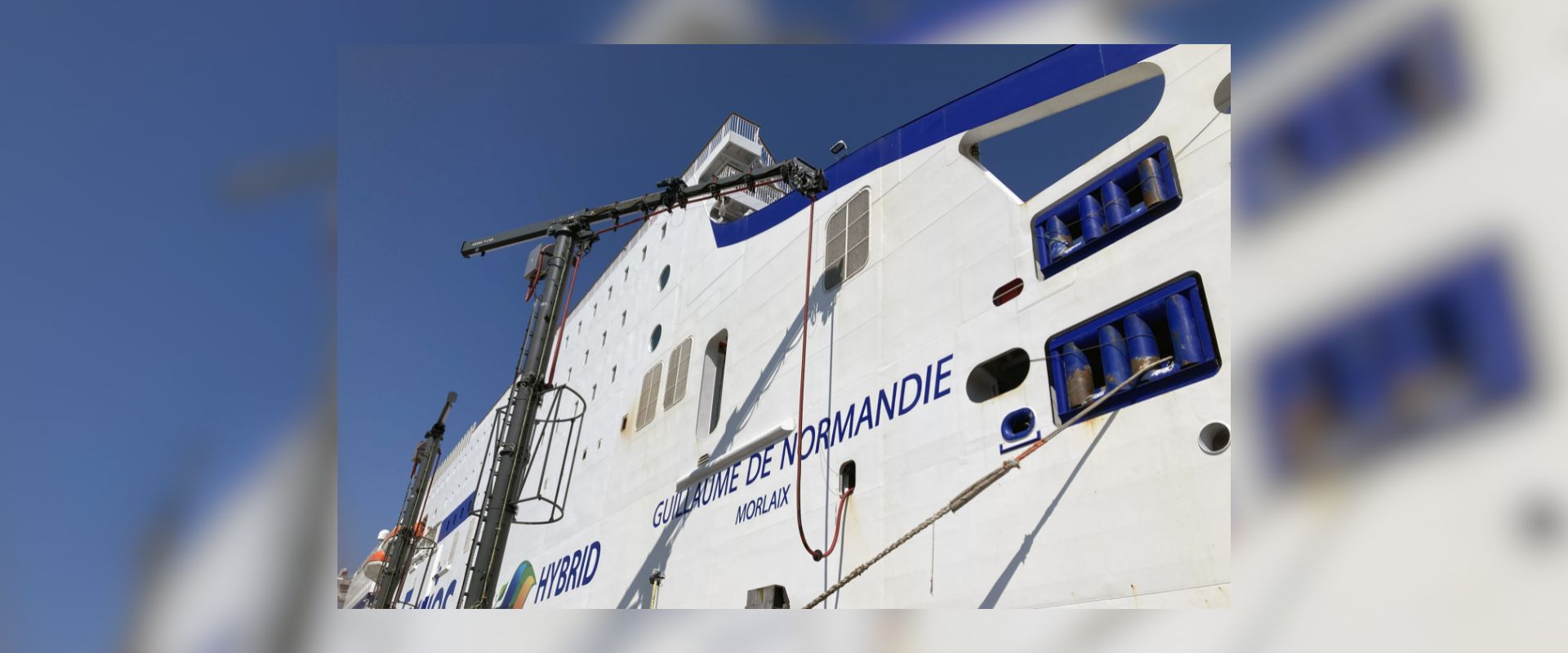
A significant milestone in sustainable ferry operations has been reached at Portsmouth International Port, with Brittany Ferries becoming the first cross-Channel operator to depart the UK using electricity supplied directly from the quayside. The achievement marks a major step forward in reducing emissions within port operations and demonstrates the growing role of shore power in supporting the maritime industry’s decarbonisation ambitions.
The landmark departure took place as more than 1,100 passengers boarded Guillaume de Normandie for the morning journey to Caen at the start of the busy summer holiday season. Before leaving Portsmouth, the LNG-electric hybrid ferry spent two hours connected to the port’s newly operational shore power system, allowing it to recharge its onboard batteries before departing the harbour using electric power alone.
The introduction of the shore power infrastructure follows a two-month testing period and is now fully operational, enabling both Guillaume de Normandie and its sister vessel, Saint-Malo, to connect whenever they are berthed in Portsmouth. By drawing electricity from the quayside instead of running onboard engines, the vessels can eliminate emissions while alongside and significantly reduce noise for nearby communities.
Once the ships leave Portsmouth Harbour, they transition from battery power to their hybrid LNG-electric propulsion systems for the remainder of their crossing to France. The technology allows emissions-free manoeuvring within the port while contributing to broader efforts to lower the environmental impact of ferry operations across the English Channel.
“This is a huge milestone for our business and one that we’ve reached thanks to a team effort by all partners involved. It means we can now realise the full potential of the greenest vessels in our fleet. We’re better neighbours to Portsmouth, and we’re leading the sector on sustainability.
But this doesn’t come without a cost. We’re urging the new government to consider tax breaks to offset the additional expense of plugging in while doing so. Without that support, the lead taken by Portsmouth International Port and Brittany Ferries is unlikely to be followed by others in the drive to net zero.”
– Christophe Mathieu, CEO of Brittany Ferries.
Despite the environmental benefits, the cost of shore power remains a challenge for ferry operators and ports alike. Electricity prices and connection charges currently exceed the cost of operating conventional onboard engines while vessels are berthed. Brittany Ferries has acknowledged the collaborative efforts of Portsmouth International Port in reaching an agreement that helps ease some of these additional costs over the coming year, but wider financial support is expected to be crucial if similar initiatives are to be adopted more broadly across the shipping industry.
If you’re looking to connect with companies driving innovation in sustainable maritime operations, port infrastructure and vessel technology, contact us today to learn more about joining one of our upcoming MTB Marine events.