


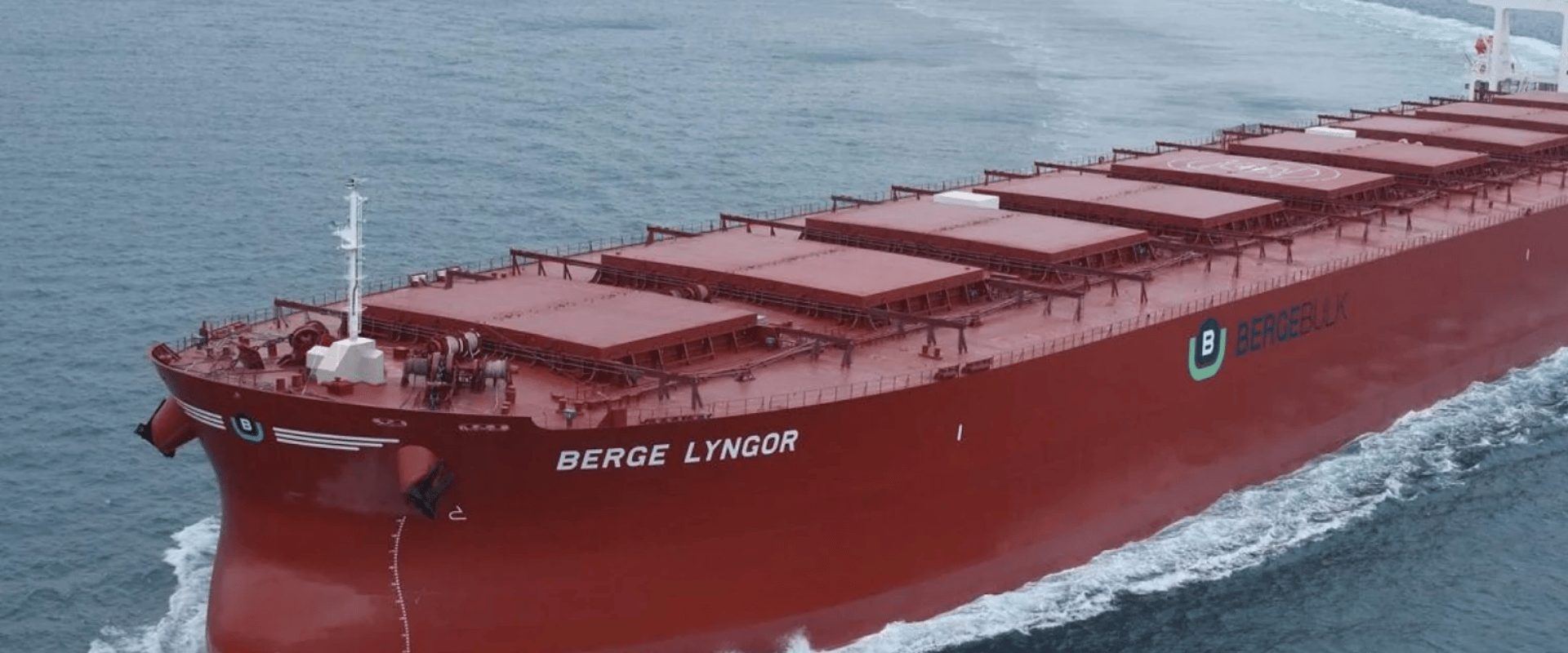
A new maritime fuel trial involving BHP and the Global Centre for Maritime Decarbonisation (GCMD) is exploring how blended biofuels made from different waste-based feedstocks could support the shipping industry’s decarbonisation efforts.
The pilot project centres on the use of a lower-emissions marine fuel created from a combination of used cooking oil and waste animal fats. Conducted aboard the Berge Lyngor, a bulk carrier chartered by BHP and operated by Berge Bulk, the initiative aims to test how these blended fuels perform under real operating conditions using existing bunkering infrastructure in Singapore.
“This initiative reflects the shared commitment of BHP and GCMD in the maritime value chain to unlock scalable, credible lower-emissions fuel pathways, as well as the importance of mobilising the industry to deliver decarbonisation solutions.
As the world’s largest bulk charterer, we want to continue to test and trial alternative fuels that will help increase supply and send industry demand signals for further investment.
At a time when fuel security is vitally important to global trade, building opportunities for future biofuels is critical. Along with LNG and ammonia, biodiesel has a big role to play in the future supply of sustainable marine fuels.”
– Emma Roberts, BHP Vice President Maritime & Supply Chain Excellence.
The vessel recently completed bunkering operations in Singapore using a B100 biofuel blend made up equally of tallow-derived biodiesel supplied by HAMR Energy and used cooking oil methyl ester (UCOME) supplied by Mitsui & Co Energy Trading Singapore (METS). Mitsui carried out the fuel blending, while Dan-Bunkering coordinated the operation using Global Energy’s bunker barge MT Maple.
The trial will examine operational factors including fuel handling, onboard performance, traceability and quality assurance, while also assessing technical considerations such as oxidation-related corrosion risks and wax formation that could potentially affect vessel fuel systems.
“This project shows the huge potential of biofuels to power fleets, reduce emissions and strengthen fuel security by diversifying supplies.
At HAMR Energy, we are focused on working with partners to unlock these opportunities. We are seeing increasing interest from users and a growing industry of fuel producers ready to meet this demand. The success of this trial is an important step in embedding biofuels from various feedstock sources in the shipping fuel mix.”
– David Stribley, HAMR Energy Co-founder,
Industry stakeholders are increasingly looking beyond used cooking oil as demand for biofuels grows and supply limitations become more apparent. The inclusion of waste animal fats in the fuel blend is being viewed as a possible pathway to broaden the availability of lower-emissions marine fuels and diversify feedstock supply options.
The project is expected to generate insights into how biofuel blends from varying feedstocks can be integrated into existing marine fuel supply chains. Participants say this could help create greater flexibility for shipowners and operators seeking to balance fuel availability, cost and lifecycle greenhouse gas emissions performance.
“Building on the experience and insights from our earlier biofuel pilots, GCMD has developed a robust framework to safeguard the integrity of biofuel use across quantity, quality and life cycle GHG emissions abatement. This framework provides a strong foundation to evaluate how a broader range of biofuels from alternative feedstocks, including animal tallow, can be credibly integrated into existing and new marine fuel supply chains.”
– Prof Lynn Loo, GCMD CEO.
According to the companies involved, the biofuel blend used during the voyage from Western Australia to China has the potential to reduce well-to-wake greenhouse gas emissions by around 79 per cent compared with conventional very low sulphur fuel oil (VLSFO).
The initiative is co-funded by the Maritime and Port Authority of Singapore through its Maritime Innovation and Technology Fund (MINT).
“Berge Bulk has been gaining experience using biofuel (B30, B50, and B100) on voyages since 2021. Over the past year alone, our biofuel voyages avoided more than 13,000 tonnes of carbon emissions. It’s an important element of our decarbonisation plan alongside efficiency, technology, and carbon capture.”
– James Marshall, Berge Bulk’s Founder & CEO.
If your business is looking to engage with leaders advancing lower-emissions solutions across the maritime sector, contact us today to find out more about MTB Marine events.